-
April 27th, 2008, 08:01 AM
#1
Senior Hostboard Member


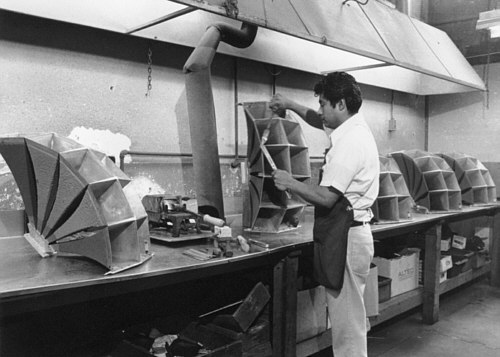
Apparently the horn was dropped in shipment and several soldered seams split near the mouths. Anyone have any ideas on the best procedure to resolder the seams without making things worse? Any help would be very welcome. Thanks.
-
April 27th, 2008, 12:51 PM
#2
Senior Hostboard Member


Honestly- with my nerves and attention span, I'd seek a professional tinsmith..they still exist.
If nothing else, give him a couple bucks for his advice.
Maybe Google "tinsmithing repair work myplace"
-
April 27th, 2008, 02:44 PM
#3
Inactive Member

35 years ago I had the knack, but my HVAC instructor didn't dwell on it, because he said we'd never need it. He was right. A shop that does standing seam copper roofs might have someone that would tackle it.
The paint/aquaplas (prey no tar) is gonna be the kicker.
-
April 27th, 2008, 04:00 PM
#4
Senior Hostboard Member

Originally posted by bfish:
[QB]35 years ago I had the knack, but my HVAC instructor didn't dwell on it, because he said we'd never need it. He was right.
<font size="2" face="Verdana, Helvetica, sans-serif">Really? My dad is a pipefitter and HVAC falls into his realm of knowledge/duties. He had to silver solder my AC when I bought a new condensor/compressor. I would have thought it a necessary skill.
-
April 27th, 2008, 05:32 PM
#5
Inactive Member
I didn't mean soldering/brazing in general, just the tinsmith type used on sheet metal. You have to first pickle or etch the metal with acid. Then you have two or three heavy irons in the fire (that's where the saying came from) that you keep rotating for the proper heat. A torch won't work, and neither will any electric iron I ever saw. It's a whole different skill that was pretty much replaced by spot welders and seamers long ago.
-
April 27th, 2008, 06:06 PM
#6
Inactive Member
-
April 27th, 2008, 07:44 PM
#7
Inactive Member
Dave, since the surfaces are already tinned, you Might (capital M) successfully reflow them after a good cleaning with denatured alcohol. It would be fairly risky, even for someone with experience. If mine, I'd probably break out some JBWeld and call it good.
-
April 28th, 2008, 04:28 AM
#8
Inactive Member
If the seams are actually torn rather than merely cracked, it suggests that there may be retained stress that could further open and separate the seam as soon as the solder melts. Tricky.
Not knowing the exact solder composition complicates it further. With the lead-free craze so far behind us, an unwitting attempt by a youngster with modern solders could be a disaster.
Bottom line, find an old-timer with some old-time (lots of lead) solder. Good Luck!
-
April 28th, 2008, 04:46 AM
#9
Senior Hostboard Member
There are several seams on one horn that were torn by some sort of impact (being dropped probably) along the solder seam for a few inches and left a bright joint exposed.
I still have some real lead solder, but the new stuff might just make a mess if it's not compatible - real good point! Guess I'll have to look around for the right place.
Multicells don't ship well or I'd get them back to GPA. The mouths on them are very fragile.
-
April 28th, 2008, 05:05 AM
#10
Inactive Member
You've got it. Ideally, the repair solder should have a melt point a few degrees shy of the original. I'd guess that the original was at least 50% lead, maybe more.
Fixing a bad/broken joint is many times harder than doing a new one from scratch. If your chosen repairman is less than 100% confident, walk away.
With a clean surface, JB Weld WILL bond, and would be a real close color match to boot.
 Posting Permissions
- You may not post new threads
- You may not post replies
- You may not post attachments
- You may not edit your posts
-
Forum Rules
This forum has been viewed: 28131802 times.



Bookmarks